book review · historical fiction · Medievalism

YES, Witch: CJ Cooke’s The Last Witch Turns Real History into Spellbinding Fiction

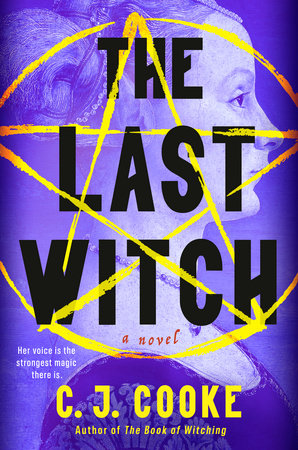
Image from Penguin Random House

CJ Cooke’s latest novel, The Last Witch, takes readers to late medieval Austria and one of the most infamous witch trials of the era, the Innsbruck trial of 1485. Helena Scheuberin, a sometimes recklessly outspoken woman, finds herself accused of witchcraft after publicly defending another woman who had been unjustly executed. Unfortunately for Helena, the man she yelled at/ publicly chastised/ embarrassed/ expressed an opinion to was none other than Heinrich Kramer, the Dominican inquisitor and author of the notorious Malleus Maleficarum, a vile and influential treatise that helped fuel Europe’s witch persecutions for centuries. From the moment Helena crosses him, her arrest for witchcraft is all but guaranteed. She and several other women are imprisoned, forced to navigate between survival and surrender in a world ruled by fear, superstition, and male authority.

Cooke’s novel is an immersive, richly imagined, deeply researched recreation of the Innsbruck trial. She brings to life both the horror of the accusations and the humanity of the women ensnared by them. The depiction of Helena’s imprisonment is particularly vivid. Cooke spares no detail in describing the cold, dark dungeon, the stench of decay and rot, and the absolute terror that permeates its atmosphere. The scene with the thumbscrews is enough to upset the stomach. And if you think thumbscrews aren’t too bad, other than the agony it causes, consider that most people who endured it never had the use of their hands again, if they survived at all and didn’t die of septic infection instead.

Despite all the misery depicted, the novel finds many moments of solidarity and resistance among the women. There are whispered prayers, a shoulder to lean on, a hand to hold, just a bunch of small kindnesses and defiances that help the women hold on to their dignity. Cooke’s attention to historical texture really helps to sell the oppressive atmosphere of a world where accusation itself could easily be a death sentence. She makes the world tangible and immediate, and brings historical suffering to life without losing compassion. 

Helena Scheuberin was a real historical figure, and she emerges here as a woman of great courage and intelligence. She is deeply human and quietly heroic, someone who refuses to let terror erase her voice. Cooke’s portrayal emphasizes her wit, compassion, and sense of justice, showing a mind capable of challenging the warped logic of her accusers. Through Helena, Cooke gives voice to the countless women silenced by history, transforming a name in a court record into a fully realized person whose story resonates across centuries. She is someone I think I would have liked to know in real life. She’s principled, brave, and unwilling to accept the world’s injustices without question. 

Heinrich Kramer, too, was a real person, to the eternal horror of anyone with an actual conscience. Cooke’s depiction of him is actually enraging. Not because of her choices as a writer, but because of the man himself. He is not the kind of villain you love to hate; he is a man whose arrogance and cruelty provoke genuine loathing. Knowing his historical role makes him even harder to stomach within the novel. This was a man whose Malleus Maleficarum codified misogyny into doctrine and justified the murder of innocent women under the guise of piety. Modern commentators have aptly called Kramer a “medieval incel,” and Cooke captures that description perfectly. He’s an insecure, petty, self-righteous man driven by resentment and fanaticism. Other characters are put off by him and his appearance, which is scrawny and filthy. Apparently being dirty and stinky is how one shows one’s devotion? Gross. Pretty sure Jesus took a bath once in a while. Baptism is at least good for something. Cooke’s portrayal of Kramer as both pathetic and terrifying is one of the book’s strengths and really highlights how personal bitterness and institutional power can combine to create monstrous people doing monstrous deeds. 

I loved this novel for its exploration of loyalty, courage, and the power of words. Helena never falters in her loyalty to her fellow prisoners. Cooke shows that bravery can come in many forms – sometimes it’s loud and defiant, sometimes it’s quiet and persistent. One of my favorite scenes was when the women in the dungeon taught each another how to pronounce their names correctly. That’s a small act that reclaims their humanity but it’s also a reminder that words are magic. That idea is borne out by the second-most common definition of the word: “a spoken word or form of words held to have magic power” (“Spell”). It’s bitterly ironic that Kramer’s use of the word “witch” becomes his own dark spell, a verbal act that destroys lives as surely as the fire he wants to burn them with. As the saying goes, I’m not afraid of witches, I’m afraid of the people who want to burn other human beings alive.

And finally, there’s the dedication, which I adore: “To Gisèle Pelicot.” YES, witch! A perfect nod to resistance and reclamation. 

The Last Witch is an engrossing, haunting, and beautifully written novel that revives a real woman’s story with empathy and power. Cooke transforms historical tragedy into a testament to courage, and I cannot recommend it highly enough.

Reference:

“Spell.” Merriam-Webster.com Dictionary, Merriam-Webster, Incorporated, 2025, https://www.merriam-webster.com/dictionary/spell

book review · historical fiction

Exploring Achilles’s Wife: A Review of Judith Starkston’s Historical Fiction

Achilles’s Wife by Judith Starkston
Genre: historical fiction
I read it as a(n): digital ARC
Length: 352 pp 
Her Grace’s rating: 5 stars

Achilles’s Wife by Judith Starkston takes one of those odd little side roads in Greek myth and turns it into a place you actually want to hang around in. This is the retold story of Achilles hidden away on the island of Skyros, disguised as a girl because his mother decides that’s the best way to keep him out of war. He becomes Pyrrha, living among the women of King Lycomedes’s household, where he meets Princess Deidamia (Mia), and promptly complicates both of their lives.

I’ll admit that I really didn’t remember Achilles having a wife at all, and I’ve forgotten a lot of Greek myth in general, to my shame. But I made a point of not looking anything up before reading this, so that it was like reading any brand new novel for the first time. That choice paid off. I got to meet these characters and find out what happens to them without mentally checking boxes or waiting for Famous Myth Moments™ to show up. I also got to see how Starkston used her skill as a writer to play around with the story and its people without unconsciously comparing her story to the classic myth. The tension builds through relationships and daily routines until everything blows up and the truth can’t stay hidden anymore. When Achilles’s identity is revealed, he and Mia are barely able to convince his enraged goddess mother to let them get married instead of wiping out the entire island. Yay! 

What kept pulling me deeper into the book was how realistic it feels. Starkston is very good at making you notice things without waving them in your face. Clothes matter. You feel the difference between fine fabric and rough wool. You notice how people move, how they sit, how they carry themselves. Skyros isn’t just a backdrop where things happen. You can feel how hot, rocky, salty, and alive the island is. I learned accidentally that Rupert Brooke is buried there, just one of those strange historical facts that sticks in your brain and refuses to leave. I can’t remember what I did this morning, but I’ll somehow remember that Rupert Brook is buried on Skyros for the rest of my life.

Later, in the Author’s Note, I learned that Starkston actually stayed on Skyros for the better part of a month so that she could see firsthand the site of this myth and accurately depict it for her readers. Mega researching FTW! That attention to detail pays off in the story. There were moments while reading when I had to remind myself that I was not, in fact, standing in ancient Greece. The research is doing serious work here, but it never turns into a lecture. Also, darn, what a hardship to get to visit an awesome island in the Aegean for a few weeks. Judith, do you need a research assistant? 😁

I also loved the way speech is handled. For example, servants don’t talk like nobles, and that’s not just in reference to their vocabulary. Their grammar isn’t always correct, they use more slang, and you can hear the class differences without being told about them. It adds texture and makes the household feel busy and real and full of overlapping lives instead of neatly arranged characters.

Also? There’s the food. So much food! I honestly wanted to eat my way through this book. Simple picnics with flatbread, cheese, and dried figs sound just as tempting as the more elaborate meals prepared for special occasions. Food becomes comfort, routine, celebration, and sometimes the only reliable pleasure in a life that is shaped by other people’s decisions. I finished more than one chapter thinking that I wanted to cook all the food mentioned in the book. To be fair, food plays a big role in Starkston’s other novels as well as in her own personal life. I know her and am friends with her in real life and have had the pleasure of eating meals that she prepared. Food is important, in history, in literature, and in real life, and this book helps us to remember that. 

There’s also a lot here about what it means to live as a woman in this world, seen through Achilles’s absolute misery at being forced into that role. His desperation to escape life as Pyrrha should feel uncomfortably familiar to modern readers. If living as a woman feels unbearable to him, that reaction alone tells you how constrained and dismissed women are supposed to be. Mia’s growth happens slowly, through frustration, observation, and little bits of well-meant manipulation. She doesn’t suddenly wake up enlightened. She learns the hard way, and that makes her far more believable.

One aspect that really pleased me was how thoughtfully the book handles Achilles’s dysmorphia in his female body. My own experience of body dysmorphia is limited to the usual Western baggage of mirrors, thinking I’m too fat, and impossible patriarchal standards, this portrayal felt careful and sincere. Drawing on what little I know about the lived experiences of trans people, it seemed clear that Starkston was trying to treat this part of the story with respect.

By the end, Achilles’s Wife left me with that extremely satisfying feeling that I had spent time somewhere real, with people who kept living after I closed the book. It doesn’t scream about its themes or beat you over the head with social commentary. It just invites you in, feeds you well, and lets the weight of the story settle where it may. I truly loved it. This is my favorite book that Starkston has written. Highly recommended!

book review · bookish things · books · lists

Analog Doomscrolling: Embrace Mindful Reading Habits

Doomscrolling. We’ve all done it. You pick up your phone to look up one small thing, open a browser, immediately forget what that thing was, yet somehow six hours later you’re still scrolling. Instagram. TikTok. A news organization’s social media page that is very carefully designed to make you angry, anxious, or afraid so you’ll keep clicking.

That’s not an accident. This is how those platforms make money, and they’re extremely good at it. They know how to grab your attention and keep you emotionally hooked, either by pushing content that makes you feel outraged and stressed out, or which gives you a big ol’ dopamine hit by confirming your biases.

A lot of people try to fight doomscrolling by carefully curating their social media feeds, like unfollowing certain accounts, avoiding news, or sticking only to content that feels light or harmless. I’ve done that, too. I don’t go on the hellsite known formerly known as Twitter at all anymore. My time on Bluesky is very limited. And my Instagram feed is aggressively curated. That’s where I go for posts about funny animals, art, travel, recipes, and crafting. No politics. No religion. Nothing designed to spike my blood pressure.

The problem is that even a carefully curated feed is still a feed. You’re still staring at a screen. You’re still scrolling. And you’re almost certainly spending more time doing it than you meant to.

What’s worked better for me is something the internet, ironically, has started calling analog doomscrolling.

More rambling behind the link – click it!
bookish things · lists · music · random · travel

Reflecting on 2025: Life, Books, and Fun

I can’t believe 2025 is already over! It was a year that was simultaneously short and the longest year ever. I cannot fathom how we are…back here. Again. All I will say is that there is one very specific front-page headline that I am eagerly awaiting. You’ll know it when it happens. I have champagne waiting for the blessed event. 

And now on to more pleasant topics.

Highlights of 2025

Continue reading “Reflecting on 2025: Life, Books, and Fun”
bookish things · Reading Challenges

Why Reading Challenges Can Hinder Your Love for Books

From Pixabay, courtesy of prettysleepy

If you’ve stuck with me in this column, you know that I have often recommended various reading challenges to encourage us all to read outside our comfort zones, to read more diversely, and to find a new topic to learn. I believe I offered several to choose from at the start of this year or end of last year. I’ve even created my own reading challenges for a couple of years on my blog.

As is my habit, I would go through the challenges I decided to do for any given year and try to find books that would fulfill each task. I always find some great books that way. It’s interesting to me to see what I initially thought I’d read as opposed to what I actually read at the end of the year. Then, over the past couple of years, I noticed something different.

Reading, the activity I love above all things, had started to completely stress me out.

Not the act itself, but the endless choices. I had so many unread books that I couldn’t decide what to pick next, so I dithered for days between books, paralyzed by an indecision that was stealing my joy.

Eventually, I realized that I wasn’t reading for pleasure anymore or reading to learn something. I was reading only with the goal to hit an arbitrary number that I had picked based on whatever reading challenge(s) I wanted to do. Reading had become competitive, and I have never been a competitive person.

Cue my booknerd-angst. In a burst of quasi-panicked self-discovery, I realized that I didn’t actually want to do reading challenges anymore. Aside from being turned off by the competitiveness, it also felt performative. But how could that be when I loved learning about new books so much? Did not reading 100 books a year make me a bad reader? How could I be a real reader if I wasn’t wrapped up in some reading challenge or another? I told you I had angst about it.

What I eventually realized was that reading dozens of books a year might help me knock down my TBR faster, but what good did that do if I couldn’t remember a single thing about a book I’d just read? Sure, I was reading fast. I was reading a ton of wildly diverse books. But as soon as I put the book down, my brain did a big memory dump and I instantly forgot what I’d just read. Note that I didn’t say, “As soon as I finished the book.” No, it was literally as soon as I put it down to go do something else. I could be in the middle of a book and not be able tell you most of the character names or major plot points. And that was for books I was actually enjoying! If it was a bit of a slog to get through or wasn’t grabbing my attention fully, I would have been hard pressed to tell you even the title or author. It started to feel like there was no real difference between reading a book and forgetting it and not reading it at all. My “read count” might have been ticking up to 50, 80, even 100 books a year, but in actuality it was more like four, the ones I remembered because I loved and engaged with them so strongly.

I don’t think it was entirely coincidental that I was concurrently learning more about slow living and trying to apply those ideas to my life. Perhaps it was the cognitive dissonance between trying to live a slow life and also trying to burn through dozens of books a year that made me rethink my approach to reading. Mostly, it was the fact that I didn’t like reading books and then forgetting them instantly. But just like the newly apostatic, I still felt guilty about what I viewed as abandoning my beliefs and goals and the stress of it, even though it was entirely of my own making, caused me to start avoiding books altogether. At the same time, I stumbled across a couple BookTubers who reminded me that it is ok to read slowly and engage deeply with a text, to savor it, to take notes about it, to analyze it. They talked about many of the practices and habits that I used to rely on while reading, which I had fallen away from in the frenzy of reading challenges. One of them, Eddy Hood from The Read Well Podcast, even has a motto that I thought was helpful: “Read slowly. Take notes. Apply the ideas.” That simple statement kick-started me, and it felt like I was getting permission to read only twelve books a year, or six or even just one as long as I engaged with it and got something out of it. Or rather, it reminded me that I can give myself permission to slow down.

Ironically, since coming to the realization that reading challenges had become bad for me, I’ve read more books, and more deeply, than I had in the last couple years. I’ve found my joy in reading again. I’m building my new habits, or rather reviving my old ones, to think more deeply about what I read. I don’t mean that I feel the need to analyze some beach-read-brain-candy kind of book that is supposed to be read in a weekend and then passed along and never thought of again. I mean getting back into more challenging books like classics and nonfiction, maybe even some philosophy here and there. Writing down new vocabulary words, looking at the rhetorical devices used, finding symbolism and imagery, highlighting favorite quotes, disagreeing with parts of what the author says, and thinking about what I’m learning from each book. I remember why I got literature degrees in the first place. I remember why I love reading. I remember that I believe reading well is better than reading quickly.

Now if I could only find my little sticky book tabs…

book review · bookish things · historical fiction

Boudicca’s Daughter by Elodie Harper — Giving a Voice to the Forgotten

Elodie Harper’s Boudicca’s Daughter tells the imagined story of two young girls who, according to Roman accounts, were ordered by Gaius Suetonius Paulinus, the Roman governor of Britain, to be raped by Roman soldiers while their mother was flogged. This atrocity became the biggest catalyst for Boudicca’s rebellion against Rome. Historically, we know almost nothing about these daughters: not their names, their fates, or even whether Boudicca had other children besides the two girls. After their assault, they disappear completely from the historical record.

That’s what makes this novel so compelling. Harper takes these nameless figures, women who were written out of history, and gives them identities, voices, and lives of their own. The book begins with the lead-up to Boudicca’s rebellion, but the uprising itself only occupies about the first quarter. The rest of the story unfolds from the perspective of her eldest daughter, who in this book is called Solina, as she navigates the aftermath of her mother’s rebellion – the trauma of the assault, the crushing defeat of her people, and her struggle to survive being sold into slavery in the heart of Rome.

One of the things I appreciated most was Harper’s willingness to explore the complexity of what happens after the rebellion ends, especially to the women who are left behind. Solina’s story feels like a reclamation of history, giving voice to those who were silenced. I’m always drawn to stories of strong women, and this one in particular highlights how resilience and strength can take many forms. Sometimes strength is quiet, sometimes it is choosing one of two evils and hoping you can live with that choice. It is aways deeply personal.

A theme that really challenged me while reading was the “enemies to lovers” dynamic. Normally, that trope doesn’t bother me when it’s something like academic rivals, sports competitors, or even just a couple of people who take an instant dislike to each other. But I’ve always been uncomfortable with stories that romanticize relationships between oppressors and victims, for example, between a Nazi officer and a Jewish prisoner. While such relationships almost certainly existed – I would think it’s a survival mechanism in at least some cases – I’ve always found that version of the trope disturbing and something I’d rather not read even if it might be historically accurate.

Yet in Boudicca’s Daughter, Harper approaches that idea in a way that made me think more deeply. When Solina forms a complicated relationship with Paulinus, the very man who ordered her rape and who destroyed her people, it isn’t presented as simple romance. If it was, it would have been unforgivably disrespectful to Solina, Boudicca, and every other woman in history who had to make a similar choice. Instead, it’s messy, painful, and psychologically complex. It made me reflect on how trauma can distort love and loyalty, how survival can blur moral boundaries, and how what we label “enemies to lovers” might sometimes be closer to a portrayal of coercion, dependency, or even Stockholm syndrome. I am still not sure what I think about Solina and Paulinus’s relationship or how honest such a relationship could ever really be.

In the end, I came away deeply impressed. Boudicca’s Daughter is not just a story about rebellion; it’s about identity and reclaiming one’s voice in the aftermath of violence. It’s powerful, unsettling, and unforgettable. I’d highly recommend it to readers who love stories about strong women, historical fiction, or anyone interested in the human side of Boudicca’s rebellion.

(Image credit: duncan1890 via Getty Images)
book review · lifestyle · travel

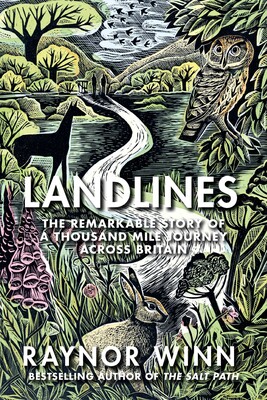
Exploring Connections in ‘Landlines’ by Raynor Winn

Landlines by Raynor Winn Genre: memoir/ nature writing I read it as a(n): trade paper Length: 303 pp Her Grace’s rating: 5 stars

Landlines – not just the telephones for old people! In Winn’s newest book, they are lines on maps. Lines on the land. Lines of communication. The theme of Winn’s third book are the various lines we encounter everyday and how they connect us to each other, to our home, to the places and people we love. 

Ray and Moth went walking, with the intention to walk the Cape Wrath Trail. That trail’s name sounds scary to me and I would probably die. Moth seemed to be getting worse and falling into a depression. Ray browbeat him into going walking again. At first, and for much of their trip, she felt guilty about it because Moth was convinced he was no longer able to do a long distance walk and he seemed to be genuinely miserable. But Ray, understandably, cannot give up on him or her hope. So she pushed and pulled and harangued until he kept going. And soon enough, they hit a rhythm that worked and rather than walking Cape Wrath and then going home, they decided to go to the next leg of the trail. And then the next. And the next. And ultimately they walked a thousand miles back home to Cornwall. 

As I wrote about previously, I don’t care if any of Raynor and Moth’s story is made up. I don’t think it is, but even if it is, I don’t care. I don’t think it matters. It’s memoir, not testimony, and there is still plenty of inspiration to be gleaned from any book, fiction or otherwise. I found Landlines to be just as inspiring and beautifully written as The Salt Path and The Wild Silence. I especially loved the references in this book to The Salt Path and how Ray now looks back on that time as one of the best parts of their life, even though while they were in it, it felt like one of the worst. I loved the way she weaves in reflections and memories of her life with Moth. They are all full of love, now tinged with the anticipation of dread and grief. “He reaches his hand out, and for a second I’m taking the last few steps through a freezing Arctic river and he’s pulling me up on to the bank of black ash, but that’s only a memory now” (20). 

A word I learned from this book: Moraine, an accumulation of dirt and rocks and other debris that is carried and deposited by moving glaciers. 

Some of my favorite quotes:

[Upon being given a couple bottles of beer by a stranger at a pub] “Put these in your bag, they’re for the big man later, don’t tell him ‘til tonight. What he’s doing, being out here, it’s a big thing. I might be loud, and drunk, but I know courage when I see it” (101). 

They’re the moments which turn desperate, annoying or desolate experiences into an understanding that the person you share the plastic bag with is the one, that you have the ability to laugh at anything, and that even having lost most of your material possessions you can survive on love, hope and a packet of dried noodles (105). 

“I know you’ve walked a long way.”

I look down at my clothes, muddy, ripped, smelling of dried bog-water. “I know, we do look a bit of a mess.”

“No, you can’t get away with it like that. I know who you are. Your book changed our lives – it changed the way we live our lives. We would never have given ourselves the time to just walk, not before we read your book.”

I look at the couple, heading towards middle age, but glowing from the wind, sun and enthusiasm. “The book might have given you an idea, but it didn’t change your lives.”

“How do you know that?”

“Because books don’t change lives. They can change how you think, but it’s you that changed your life” (227). 

Thousands of feet over thousands of years have trodden many of the same trails we have, tracing their passage on to the landscape, imprinting their memories into the soil. What remains are not just paths, they’re precious landlines that connect us to the earth, to our past and to each other. We’ve followed them for a thousand miles, seen so much, heard so many stories, until now, at the edge of the land, we’ve become something other than just walkers. We’re at the point where time and place and energy combine, where we become the path, the walker and the story. No need for runestones, it’s all held within us; we’re already part of our landlines, part of the song of the land (298-299).

academic · book review · bookish things · Medievalism

From Purity to Corruption: Gardens in Medieval and Gothic Stories

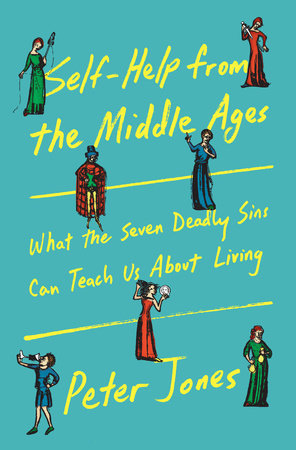
So this initially started as a straightforward book review. I read a book that I’m reviewing for the Historical Novel Society, called Her Wicked Roots, which is a retelling of Nathaniel Hawthorne’s short story “Rappaccini’s Daughter.” But as I worked on that review, I kept getting side-tracked and decided that I wanted to write a more in-depth article about gardens, both mediaeval and Gothic. Plus, I can’t post my HNS reviews until they publish it first. So instead I decided to remove the HNS book from this and will just post that plain review once they publish it. So now, behold! I will talk at you about gardens.

The concept of a divine garden has carried symbolic weight for thousands of years. From the gods’ garden in ancient Sumeria to the Hesperides’ golden apples, to the comparatively new Garden of Eden, stories of sacred gardens appear in myths all around the world. In medieval Europe, the image of the hortus conclusus (the enclosed garden) was particularly popular. It symbolized purity, chastity, and divine protection. In art, the Virgin Mary is often depicted sitting serenely within walled greenery, surrounded by lilies or roses that symbolize innocence and immaculate conception. The hortus conclusus was supposed to be safety itself. 

Anonymous, Madonna and saints in the Garden of Paradise (around 1410), Public Domain

But by the time Gothic literature popped up centuries later, that enclosed space had changed. The Gothic garden is the hortus conclusus inverted, a space where safety becomes confinement, purity becomes corruption, and nature no longer reflects divine harmony but human ambition, repression, and dread. It is the Upside Down of gardens! Also, humans ruin everything. 

St. Dunstan in the East, London, my own photo taken Sept 26, 2024.

Nathaniel Hawthorne’s short story, “Rappaccini’s Daughter,” portrays this transformation. Hawthorne sets his tale in a beautiful but deadly garden in mediaeval Padua, which mirrors the mediaeval hortus conclusus while also making it dark and twisty, and honestly way cooler. Rappaccini filled his garden with extremely poisonous plants and raised his daughter, Beatrice, among them until she herself literally became toxic. Birds avoid her, bugs and butterflies drop dead if they breathe near her. She is an innocent made unclean, a sort of parody of the Marian enclosed garden. Rather than a rose without blemish, Beatrice is a warped flower that was made monstrous by her father’s quest for knowledge at any cost. Rappaccini’s garden is a site of scientific overreach and destruction. It might be hidden away but it’s not protective, and its walls keep in corruption rather than keeping it out. Beatrice is just another victim of patriarchal control and as such, she is easily discarded once she is of no further use to her father or the story.

The Gothic novel frequently returns to this darker version of the garden. There are ruins, tangled vines, shadowy groves, hidden paths, and rot rather than cultivation. Nature turns into something dangerous and unhealthy. Flowers no longer symbolize purity. In Gothic hands, the garden isn’t a symbol of sanctity anymore. It becomes a mirror of humanity’s depravity. This reversal would very likely cause the Romantics to rend their garments and tear their hair. Byron would probably write super emo poems about it, for sure.

The medieval tradition makes the change in how nature is viewed even sharper. Texts such as the Song of Solomon which reads, “My sister, my spouse, is a garden enclosed, a garden enclosed, a fountain sealed up” (4.12, Douay-Rheims Bible), were read as allegories of Mary’s virginity. Poetry and iconography saw gardens as pure and contained spaces. But the Gothic imagination with its preoccupation with death and the uncanny, was, like Romanticism, a reaction against Enlightenment rationalism. As a result, the Gothic turned the idea of enclosure inside out. Enclosure meant captivity. Purity blurred into promiscuity. Now everything is all open and leaky and symbolic of corruption, specifically female corruption.

This shift tells us a lot about cultural change. The Gothic garden reflects human fears about unchecked knowledge, the danger of passion, and women’s agency. God forbid a woman have agency in any time period. These changes make sense when we view them as a reflection of the fears Enlightenment rationality and pursuit of science had upon much of society. Hawthorne’s Padua is one piece of this cultural shift, but so are the other crumbling castles, gardens, and estates that are scattered throughout Gothic fiction across the centuries.

Where the hortus conclusus invites reflection about purity, the Gothic garden forces us to reckon with corruption. Both depend on boundaries and are heavy with symbolism, but they serve opposite ends. One offers a vision of sanctity; the other, a mirror of human darkness. And yet they are inextricably linked: without Mary’s walled gardens, the poisoned gardens of the Gothic would lose their danger. The Gothic thrives on inversion, and the Gothic garden is my favorite reversal.

Further Reading:

Reference:
The Holy Bible: Douay-Rheims Version. Translated from the Latin Vulgate. Rockford, IL: TAN Books, 1971.

book review

Cultivating Our Garden with Voltaire: Why Candide Still Resonates

Candide by Voltaire Genre: Classics I read it as a(n): pb Length: 155 pp, including extensive footnotes Her Grace’s rating: 4 stars 

Stick with me here. I promise this has to do with Candide. Most of you probably know that the Enlightenment was a movement focused on reason, individualism, and challenging traditional institutes of authority like religion. One of the greatest Enlightenment authors, philosophers, essayists, and satirists was Voltaire. He had a bit of a feud going with Gottfried Leibnitz. That was the guy who independently discovered calculus at the same time as Sir Isaac Newton. Seriously, fuck both of those guys. Actually, nobody apparently ever did fuck Newton. The going belief is that he died a virgin. That’s what you get for inventing calculus. 

Then, on November 1, 1755, an offshore earthquake caused a tsunami that all but annihilated Lisbon, Portugal. It killed about 30-40,000 of Lisbon’s ~200,000 people outright, and about 10-15,000 more in Morocco and other seaside port towns. All of Lisbon’s churches were destroyed. Incidentally, this earthquake also occurred on All Saint’s Day and the vast majority of those killed were in church for worship. The irony.

This catastrophe posed a big problem for Leibnitz and the Optimists, those who follow the philosophical idea that this is the best of all possible worlds. God wiping out all the churches on his own holiday sure is a hilarious way of showing that this is the best of all possible worlds and that it somehow solves the Problem of Evil while also proving God’s perfect goodness. Leibnitz and his fellow Optimists apparently tied themselves in knots trying to rationalize this in the face of such tragic loss of innocent life and human suffering. I’m not sure why they didn’t have a crisis of Optimism in the face of the vast suffering and death caused by capitalism, slavery, colonialism, war, torture, disease, or any of the other daily horrors that existed and still exist, but compartmental thinking is a special skill most humans have. People are strange. 

Enter Voltaire, that absolute scamp, with An Explanation! Sort of, anyway. He wrote a satirical novella – if you guessed Candide, you were right! – to refute the concept of Optimism since this is very clearly NOT a great world and he was going to point that out to anybody who thought it was. I did mention he was a satirist, yes? Good, that bit is important.

Now, on to the actual story!

Candide is a young scholar in the house of a baron. He gets kicked out of the baron’s estate for carrying on with the baron’s daughter, Cunégonde. Candide sets out to try to make his own fortune. Along the way, he gets forcibly conscripted into the military, gets shipwrecked, survives an earthquake (nods to Lisbon), gets flogged, reunites with Cunégonde, loses her again, goes to South America, finds actual El Dorado and befriends its king, inexplicably decides to leave El Dorado but now he’s filthy rich since he picked up mass quantities of diamonds and gemstones just laying on the ground in that city, loses most of said fortune when the majority of his pack red sheep (AKA, llamas) fall off a cliff, has run-ins with Inquisitors, and a variety of other upsetting and disturbing experiences in his vast travels. Seriously, it’s like the story of Job, only Candide is a whole lot derpier than Job, and naive. I think naivete is really unappealing in an adult, and I am pretty sure Voltaire thought so as well. The only good thing that happens during his varied travels, really, is that Candide collects a terrific assortment of friends and companions. 

All of Candide’s experiences sorely test his devotion to Optimism which, as he explains to his servant Cacambo, is “The mania for insisting that all is well when all is by no means well” (52). It’s the same line of reasoning as “God works in mysterious ways” or “Everything happens for a reason,” and just as unrealistic. Voltaire thoroughly excoriates Optimism as delusion by using his little treatise to highlight religious hypocrisy in the face of massive amounts of suffering, humiliation, war, greed, and human cruelty, because these things happen in this alleged best of all possible worlds. 

Voltaire is imaginative and diabolical in the torments he invents, only not really because everything he heaps onto poor Candide is drawn from the real world. Some of it is honestly funny, such as when he got rich in and then lost his money and jewels because the llamas that were packing it out for him fell off a cliff. Poor llamas. But many other examples were not funny, and not intended to be so. For instance, Candide encounters a slave who is only half-clothed and is missing a leg and hand. Candide stops to talk to him and the man tells him, “When we work in the sugar-mills and get a finger caught in the machinery, they cut off the hand; but if we try to run away, they cut off a leg: I have found myself in both situations. It is the price we pay for the sugar you eat in Europe” (51-52, my emphasis). This is just one scene where Voltaire criticizes the common practice of the time. He was against slavery, and took ample opportunity to speak against it in Candide, despite his sometimes problematic views on race, which we can also see in the novella. 

Similarly, Voltaire challenged colonialism and religious hypocrisy by showing Candide’s experiences with the Jesuit priests. They had control over the indigenous peoples and claimed that they were there to convert and be spiritual leaders to them. That’s pretty hard to do when your whole group is deeply involved in political and economic power struggles that expose the breathtaking hypocrisy of such organizations. Throughout Candide, Voltaire spoke against colonialism, religion, greed, war, and the general human capacity for overwhelming cruelty. I could go on for days about it, and how amazing it is that he could so thoroughly cover so many pressing issues in under 100 pages. But I won’t. I just urge you to read it if you haven’t done so.

Candide reads as easily as a modern book, partly because so many of the topics Voltaire tackles in it are still so disgustingly relevant to today’s society. That is the beauty of satire as well. It takes heavy topics that nobody wants to think about and uses absurdity to mirror those issues. It can also highlight the struggle between cynicism and hope. Personally, I think too many people confuse reality for cynicism. One can be hopeful and work towards good things and still be realistic about the fact that we do, in fact, live in a vast and relentless hellscape. The two are not mutually exclusive. That’s where Candide’s naivety comes in, and why we shouldn’t be naive. Also, let’s be honest. Satire also works as a social commentary because some of it is fucking hilarious and we remember things that are funny, even if they are darkly so. Laugh or cry, folks. If you have to do one or the other, I reckon it’s better to laugh.

I really liked the end, which has been a source of discussion for a long time. In case you have gotten this far and don’t want to be spoiled about the ending, I’ll put it behind a spoiler tag.

Click to reveal the spoiler Candide, Cunégonde, Pangloss, Cacambo, Martin, and a handful of other motley characters retreat from society and go live on a little farm, their Optimism thoroughly beaten into submission.

On occasion, Pangloss tries to wax philosophic with Candide, whose final reply is, “That is well said, … but we must cultivate our garden” (94). That’s a nice little bit of Stoicism, which Voltaire embodied through his own preference for emotional control and rationality, even if he might not have specifically adhered to that philosophy. It also brings to my mind the mediaeval concept of the hortus conclusus, the enclosed garden, a metaphor for one’s inner thoughts and growth, and protection. Traditionally, it was originally symbolic of the Virgin Mary and purity, and I am morally certain that Voltaire did not have that in mind when he wrote his famous final line of the novella. Maybe he meant it in more of the protective way, that Candide and his found family took care of each other and were safe from the dangers of Optimism. That seems like something he’d say. 

Regardless of whether you are the darkest pessimist, the ultimate optimist, or something in the middle, I think Candide is a great read and you should do so if you haven’t already. Like I said, it’s still highly relevant to modern society and is a great little book to get you thinking about what really matters and what is just distraction and chaff. 

Reference:

Voltaire. Candide, or Optimism. Translated and edited by Theo Cuffe, Penguin Classics, 2005. 

book review · books · Star Trek

Maps, Mystery, and Mayhem in Star Trek’s The High Country

The High Country (Star Trek Strange New Worlds) by John Jackson Miller
Genre: sci-fi
I read it as a(n): hardcover
Length: 371 pp
Her Grace’s rating: 4 stars 

Pike and the gang are headed out to test an experimental new kind of shuttle. It is a miserable failure, but not because the technology is flawed. It’s because they stray into a region of space where absolutely no technology works. They crash on a planet, Skagara, their emergency transporters sending the shuttle crew all across the planet. To the surprise of everyone, not only is there a thriving blended civilization there, but a close friend of Pike’s. 

The people of Skagara come from many places. The humans are descended from a lost ship that harkens back to an episode of Enterprise. The thing they all have in common is that they were brought to Skagara to follow a tech-free way of life. To Pike’s friend, Lila alley, it is paradise, but to Pike and the rest of the Enterprise crew, it’s awful. They set off on a mission to reconnect with the shuttle crew and also solve the mystery of why nothing works so they can escape from the planet. Unfortunately, Lila and many others will do anything to prevent Pike from doing what they think will ruin their way of life. 

Ok, first things first. This Star Trek book has MAPS! I fucking love maps in sci-fi books! I have never seen a map in a Star Trek book before, and not only is there A map, there are five maps! THERE! ARE! FIVE! MAPS! I fully support putting maps in Star Trek books and I wish every one of them that is based even in part on a planet or moon or planetary body of any kind came with a map. 

Next, the story itself was quite fun. It is a pretty typical Trek story – crashes and planets and a Problem That Will Destroy the Universe unless Our Heroes can fix it! The civilization on Skagara is very Old West, so there were plenty of parts of this book that read like an episode of Firefly. I ALSO approve of Trek that reminds me of Firefly! And vice versa! When can we get more Firefly books as well as Star Trek books, please and thank you? 

We got to see a lot of good character development for Uhura in particular, which was nice. Not everything the shuttle crew experienced was good and some of it will leave scars. Not even Utopia is perfect. There was also some good back story for Pike, which I always like. I dig a good back story. 

For me, Number One had the least interesting story line and least amount of character growth. Spock had the most “yeah, right” story line. Fun, but yeah, right, like that would happen. 

I also liked that this book had short chapters. It felt like I was making faster progress than I was, and also made it a lot easier to read in bed at night. I could say that I was going to read 2 chapters and actually make it through 2 whole chapters without my book hitting me in the face. 

Anyway, it was a fun story, nothing too unexpected at all. A solid Star Trek brain candy book.